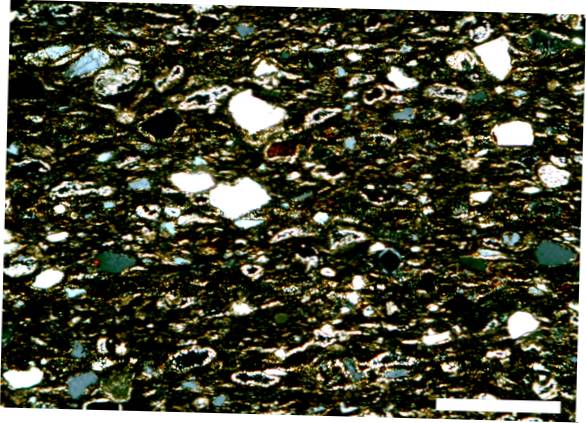

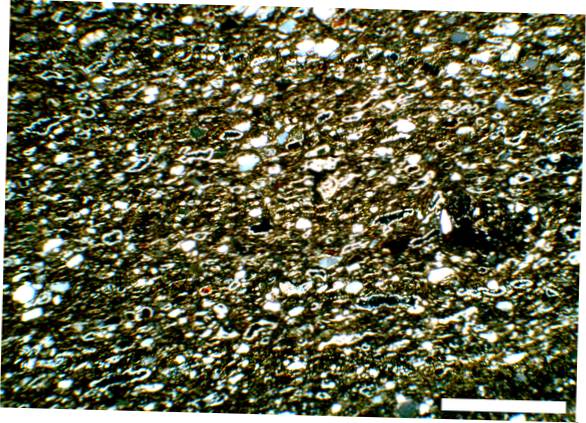




| object data | fabric description | archaeometry | petrography |
| sample no | M 209/11 |
|---|---|
| fabric type | AKR-C-1 |
| supposed site of production | Agrigento / Akragas |
| sample taken | May 2018, by Babette Bechtold, Institute of Classical Archaeology, Vienna University |
Context Data |
|
| site of discovery |
Agrigento / Akragas Area a Sud del Tempio di Zeus |
| interpretation of context | sacred |
| registration code of context | AG13/240 |
| registration code of object | AG13/240/3bis |
| chronology of context | Mid-second half 4th c. BCE? |
Object |
|
| ware | Coarse Wares |
| object form | Lekane |
| chronology of object |
Greek 4th c. BC |
| fragmentation | rim, body |
| dimensions | diameter: 33.6cm (rim); height: 4cm |
| surface description | pale brown 2.5 Y 8/2 |
| drawing |

|
Distribution of fabric type
“AKR-C-1”
 production
 discovery
Representative sample for
“AKR-C-1”
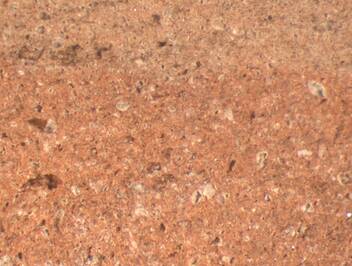 M 209/5
There are 7 more samples assigned to fabric type
“AKR-C-1”.
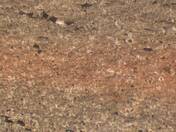


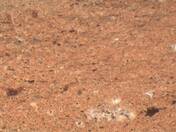
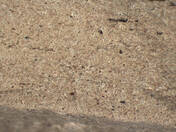
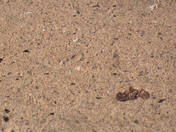
 |
First observations on western Greek amphorae produced at Akragas: Introduction\r\nThe colony of Akragas has been founded by nearby Gela ca. 580 B.C.E. in the central part of Sicilys southern coast, most probably with the additional support of people from Rhodes and Crete. Agrigento counts among the not very numerous western Greek cities expressively mentioned by several ancient authors because of their notable wine yards.
|
Fabrics of Akragas: IntroductionStarting from the petrographical and chemical analysis of 21 samples of western Greek amphorae, 17 samples of coarse wares and ceramic building materials and seven samples of raw materials, four local ceramic fabrics have been identified: one of transport amphorae (AKR-A-1), two of coarse wares (AKR-C-1 and AKR-C-2) and one of ceramic building materials (AKR-CBM-1).
|
Un'officina per la produzione ceramica ad Agrigento: prime anticipazioni sui dati di scavo e analisi dei materiali dal Quartiere fuori Porta V (QAV): Nel quadro delle ricerche avviate negli ultimi anni ad Agrigento dallUniversità di Bologna in collaborazione con il Parco Archeologico e Paesaggistico Valle dei Templi, è stato promosso un progetto sulle produzioni artigianali: la ricerca, condotta in una prospettiva diacronica che abbraccia lintera vita del centro - dalla fondazione della polis greca fino alletà tardoantica - si è concentrata su ogni aspetto dellattività artigianale