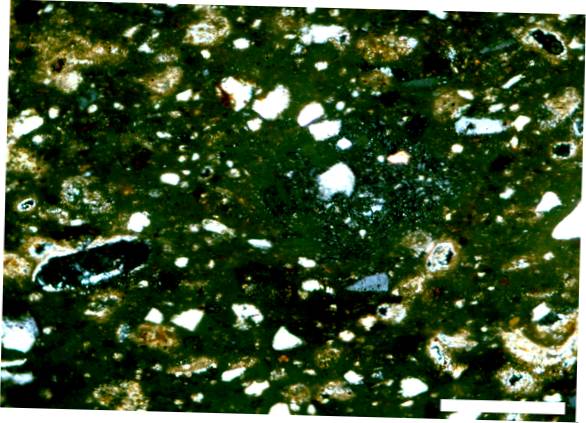

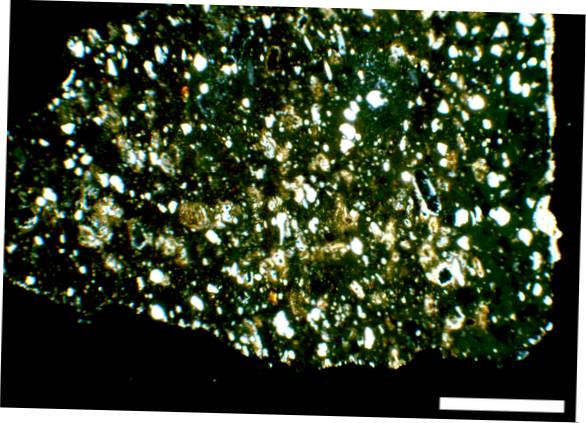
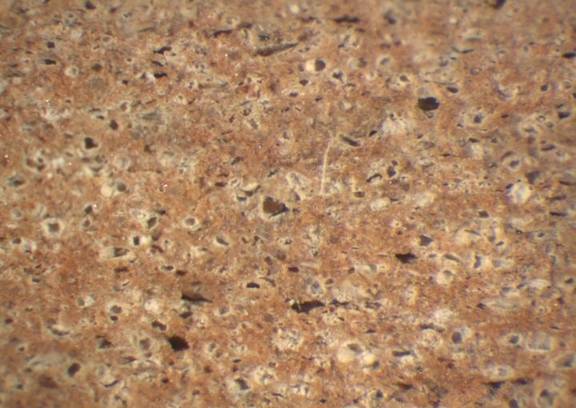
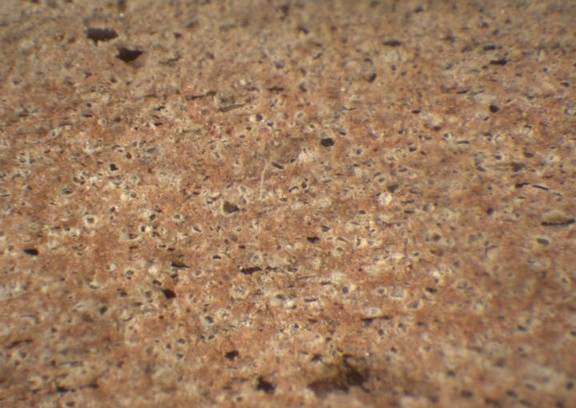

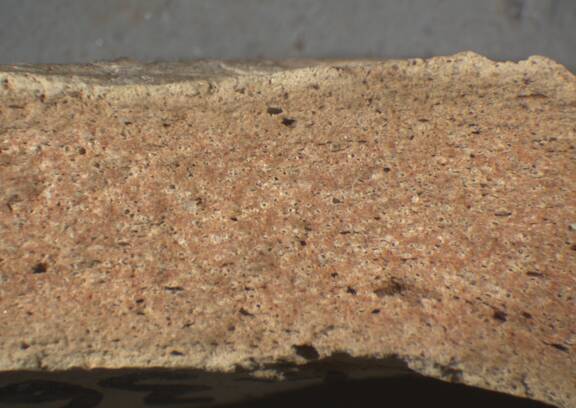

| object data | fabric description | archaeometry | petrography |
| sample no | M 154/30 |
|---|---|
| fabric type | SEL-A-4 |
| supposed site of production | Selinunte / Selinus |
| sample taken | June 2018, by Babette Bechtold, Institute of Classical Archaeology, Vienna University |
Context Data |
|
| site of discovery |
Selinunte / Selinus Tempio B |
| interpretation of context | sacred |
| registration code of context | Saggio H US 5 |
| registration code of object | P09.83; SEL 33690 |
| chronology of context | 300-290 BCE |
Object |
|
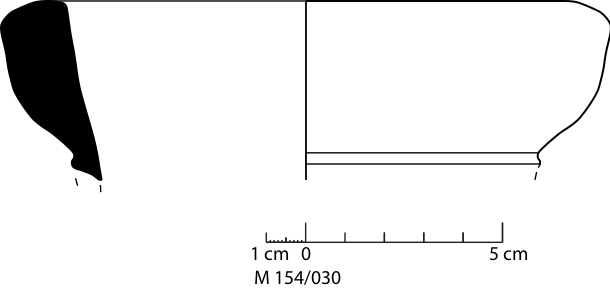
| ware | Transport Amphorae |
| object form | Amphora |
| object type | Western Greek, Gassner rim 7 |
| chronology of object |
Greek 420-380 BC |
| fragmentation | rim |
| dimensions | diameter: 13.2cm (rim); height: 5cm |
| surface description |
slipped Very pale brown 10 YR 8/3 |
| drawing |
|
| publication | Bechtold 2020, fig. 4,7 |
Distribution of fabric type
“SEL-A-4”
 production
 discovery
Representative sample for
“SEL-A-4”
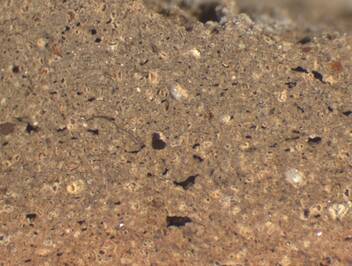 M 154/150
There are 7 more samples assigned to fabric type
“SEL-A-4”.



 |
Caratterizzazione petrografica dell anfora po85/893 prodotta nell isolato FF1 Nord di Selinunte: Lanalisi petrografica è stata eseguita mediante microscopia ottica in luce polarizzata trasmessa (microscopio polarizzatore Leica DM-LSP) su una sezione sottile (0.03 mm) ottenuta da un frammento rappresentativo dell anfora oggetto di studio (per il tipo ved. supra, M. Fourmont, Fornaci da vasaio nell isolato FF1, fig. 20,1-2), preventivamente consolidato sotto vuoto con resina epossidica.
|
Amphorae and Coarse Ware Fabrics of Punic Selinus: Evidences for Local Production and Export: IntroductionCurrently, research on pottery production in Punic Selinus is at a very initial stage. Despite the discovery, during the 70s and 80s, of several ceramic kilns in 'isolato FF 1' and in the south-eastern part of the acropolis
|
Anfore e ceramica comune di produzione punica da Entella (PA): IntroduzioneIl presente contributo costituisce una sintesi preliminare dello studio comparato di anfore da trasporto e di ceramica comune punica rinvenuti nell'abitato e in una delle necropoli di Entella
|
Fornaci da vasaio dell'isolato FF1 Nord e produzione anforica nella Selinunte punica (Sicilia): ABSTRACT Lo studio sistematico dell'insieme dei reperti relativi a tre fornaci di periodo Ellenistico-punico sull'isolato FF1 Nord di Selinunte (Sicilia) consente di dare le prime testimonianze di una produzione anforica sul sito. Si studiano i resti delle diverse parti delle strutture, l'aspetto fisico dei resti, nonché le forme che rinviano, spesso da lontano, ai tipi definiti dal Ramón Torres. Il confronto con la situazione storica e stratigrafica porta a fare nuove proposte per la cronologia delle serie prodotte a Selinunte.
|
First evidences for western Greek amphorae produced at Selinus: Introduction\r\nThe issue of the existence of a local production of transport amphorae, intended for the trade of food surplus, represents one of the key questions in order to a better understand the economic development of western Greek colonies. Specifically, Selinunte's agricultural vocation is undoubted
|
Western Greek amphorae fabrics of Selinus: Introduction\r\nThe identification of the present fabric is related to previous research on Punic amphorae fabrics of Selinunte. The newly created fabric SEL-A-4 is composed of Western Greek Amphorae found chiefly at Selinunte.